
Key Takeaways
- Use a “dual-purpose” strategy where content reinforces the value of a paid membership for current subscribers while building trust and curiosity for non-subscribers.
- Start with a narrative introduction. Avoid simple recaps; instead, use this space to share personal insights or behind-the-scenes context to build a human connection with the reader.
- Structure your top stories using the Axios-style approach (What happened, why it matters, and go deeper). This makes information easy to digest while teasing the depth of your full coverage.
- Beyond headlines, include high-utility elements like event calendars, “editor’s picks,” or interactive closers (polls and trivia) to make the newsletter a standalone destination.
If you’re a publisher whose business is centered around digital subscriptions, then your newsletter may very well be your most important distribution channel.
For your current subscribers, it’s an amazing way to provide all-access in a breezy format while providing those non-paying members lots of reasons to consider subscribing.
How you write it and format it though can make or break your ability to retain your subscribers and attract new ones.
I’m going to spend today’s newsletter walking through how to write a newsletter that works for both sets of readers.
First, let’s talk about the strategy
You definitely can have a single newsletter that works between subscribers and non subscribers, but understanding the goals that you need to achieve for both sets of readers is pretty important.
Here’s a simple break down that will get you headed in the right direction:
Subscribers: You have to make sure that the content in the newsletter and the experience reinforces the value they are getting. You can do this by showing off your expertise and insights (a great introduction helps) and feature content that goes deeper than what they were expecting.
Non-subscribers: The goal with this group should be to create engagement and loyalty. The more times they open your newsletter, the more opportunities you have to sell a subscription. You can do this by simply making sure the content that is most consumed in your newsletter (this may be different than your site’s most popular content) is up front and center and easy to access.
Now let’s look at how to lay this out
The best newsletters (to reach both sets of readers) have to balance narrative writing and headlines. Here’s how you could do that:
1. At the very top: A great introduction
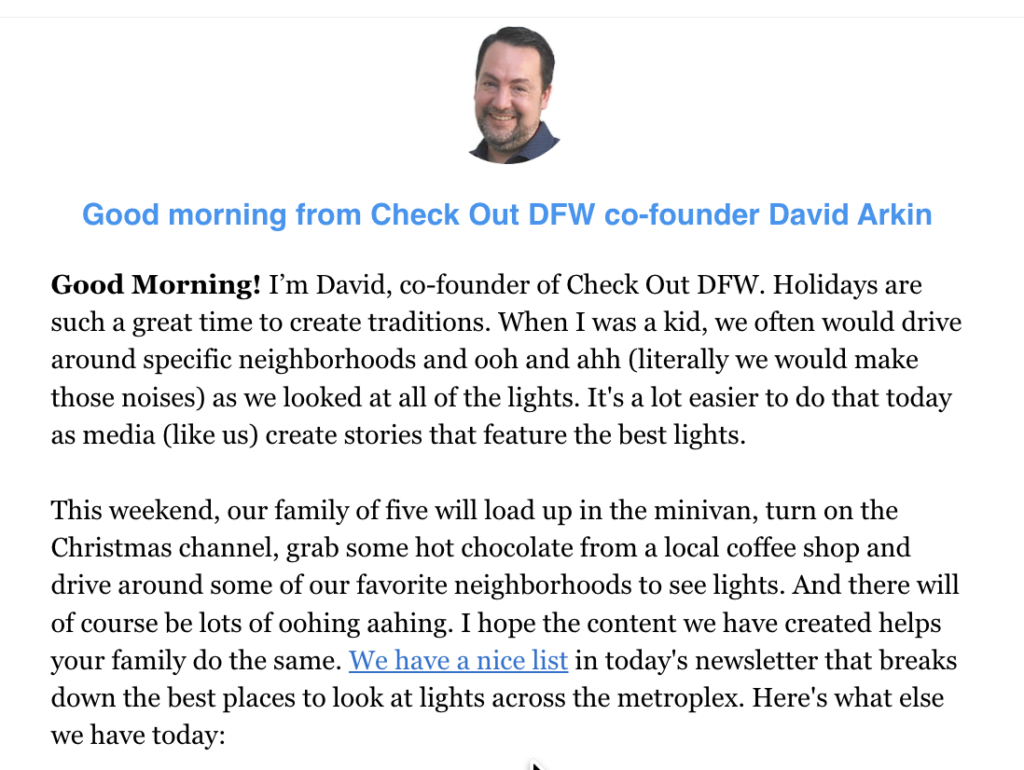
This shouldn’t be where you are recapping what is in that newsletter, but rather this is a place to create a connection by sharing a personal take or explaining your reporting. That approach may differ wildly based on the newsletter’s topic and audience, but you just want to make sure you are building that value and connection.
Another approach I love in this space is to create some kind of standing element after a few sentences of narrative writing like three things that will matter today or know about.
Additional things you can do in this space include ending it with something very useful like a line about the thing that’s going to surprise readers most in today’s rundown or the reading time for the newsletter that day.
When we were running CheckOut DFW, I would send an email every morning to our subscribers and tried to personalize it in some way. Often, readers would mention how much they liked that “morning letter from me.” I knew what they meant.
2. The top story: Go deep and tell people why it matters
In the space under the introduction, you’ll want to really show off your best stuff and also the most relevant thing that day for people.
I’d dedicate 150 words or so to this container and Axios style headers to guide the reader through the story works here: What happened, why it matters, go deeper. I’m a huge fan of this smart brevity approach because it not only makes it easier to consume the information, but flexes what more you’re offering (the go deeper.)
3. The headlines: Curate things readers need to read
This is not a complicated section of your newsletter. You simply need a headline, photo and maybe a short subhead for each of the stories that you feature. I’d suggest no more than five stories.
This section is important to show your subscribers that you’re covering the things that matter and it provides you an opportunity to maximize the opportunity to get non subscribers to click on stories that could covert them.
An important point on the headlines: Don’t do clickbait, but also make sure the headlines are written in a way that drives some curiosity so you get those non subscribers to open it.
4. Things to do: Help plan their day, weekend, week
A list of events (pulled from your calendar) is a very helpful way to create that feeling among your audience that they aren’t only being pushed to click on stories in your newsletter, but they can consume content right there in your newsletter that’s useful.
You could also feature things like this that aren’t things to do:
• A list of editor’s picks headlines from the week
• A story a reporter wrote they’re proud of and why
• Quotes of note from that day’s reporting
• A roundup of headlines from around the web
Here’s an example from The Hustle that does that web roundup:

5. The closing: Make it engaging and have fun
You need a sign-off and it could be a mix of useful, serious or fun. Here are some ideas:
- A quick poll (“Agree or Disagree?”)
- A rotating question of the day (with a form to submit)
- A simple trivia or guess (“How many people…?”)
- Emoji reactions or one-click feedback (How did we do today?)
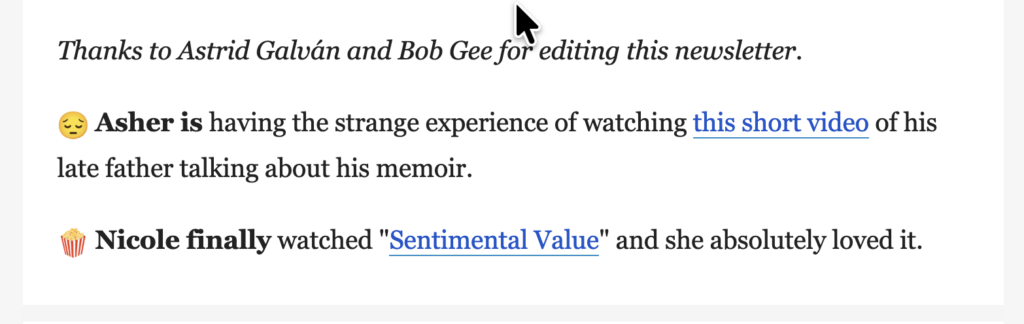
I like how Axios handles the end of their note, with thanks to the copy editor who looked at the newsletter, along with a little information on what the newsletter writers are thinking about.
As you evaluate your newsletter, look at each section and ask yourself what it’s actually doing and who it’s for. A simple way to do this is to review a recent newsletter and look at each block to see if it’s creating engagement, driving clicks, or reinforcing value.
Need help growing audience and revenue?
🚀 Want to know how you can work with us? This page outlines our services, approach, current clients and more.
🌐 Follow our LinkedIn and Instagram pages to stay up to date on the latest in media, our blogs and recommendations.
📬 Sign up for our monthly LinkedIn newsletter which provides company updates, tips and more.
👋 You can always drop me a note by responding to this email, emailing david@davidarkinconsulting.com or calling 832 407 0188.
We'd love to help your organization! Fill out the form below to get started.
Recent Posts

Sep. 15, 2026
3 ways to turn data center coverage into ongoing audience products
Sep. 15, 2026
How newsletter resends can increase email opens and reach more readers

Sep. 14, 2026
6 Instagram strategies that are working for publishers right now

Sep. 01, 2026
How to write AEO-friendly ledes without losing your editorial voice

Sep. 01, 2026
50 fall content ideas that will help you grow your audience this season
Sign Up For Our Newsletter
Case Studies

Jul. 05, 2026
The Reels strategy helping one TV news anchor grow her audience

May. 27, 2026
How Pittsburgh Magazine created AI workflows their teams are now regularly using

Mar. 16, 2026
How a unique training program is helping a university newspaper learn the digital skills newsrooms need

Jul. 30, 2025
How analytics can make your content better and your sales case studies really effective

Feb. 06, 2025