

Research has shown for years that readers enjoy learning about journalists’ backgrounds and the work they do, and when media companies make efforts to explain their choices and processes they build more trust with their audience.
Initiatives like Trusting News have highlighted why being transparent with your audience is so important and how explaining how you make decisions can lead to not only more educated readers but more loyal ones, as well.
You may have seen a recent effort from The New York Times that really puts the idea of reader transparency and introducing your staff to your audience on full display. The Times recently rolled out redesign byline pages for their reporters. These pages are discoverable through the stories that reporters write. Readers can simply click on the reporter’s photo when reading a story to go to these pages.

The pages provide the reporters a space to explain how they approach their jobs, their background, awards they have won and their personal ethics.
The pages also do a nice job making it easy for readers to get in touch with the reporter and read their most recent content.
Some news organizations have bios at the bottom of articles that include a sentence or two about the author. The sentences typically focus on the reporter’s byline or simply just feature the reporter’s title.
In many cases, without building out everything that The Times has done, even the smallest media companies could apply some of the best practices in The Times’ approach. Here’s how:
- Explain who you are and what your beat is in one sentence.
- Explain what you love about the work you do or how you do it. For example, if you are a city hall reporter, you could explain how you review meeting agendas, why you stay through an entire meeting and the kind of follow up stories you do after a meeting.
- Detail some of the awards you have won or include something unique about your company’s ethics policy that stands out or is particularly important to you.
- Make sure you have a way in your bio that allows readers to easily contact you.
- There is a lot of value in not just having a box at the bottom of your story with this information but actual reporter bio pages. This is a good SEO best practice. Here is a good example.
This doesn’t necessarily have to turn into a 500-word post, but two or three paragraphs following the guidance above would get the job done.
David Arkin is the founder of David Arkin Consulting and can be reached at david@davidarkinconsulting.com
We'd love to help your organization! Fill out the form below to get started.
Recent Posts
Aug. 07, 2026
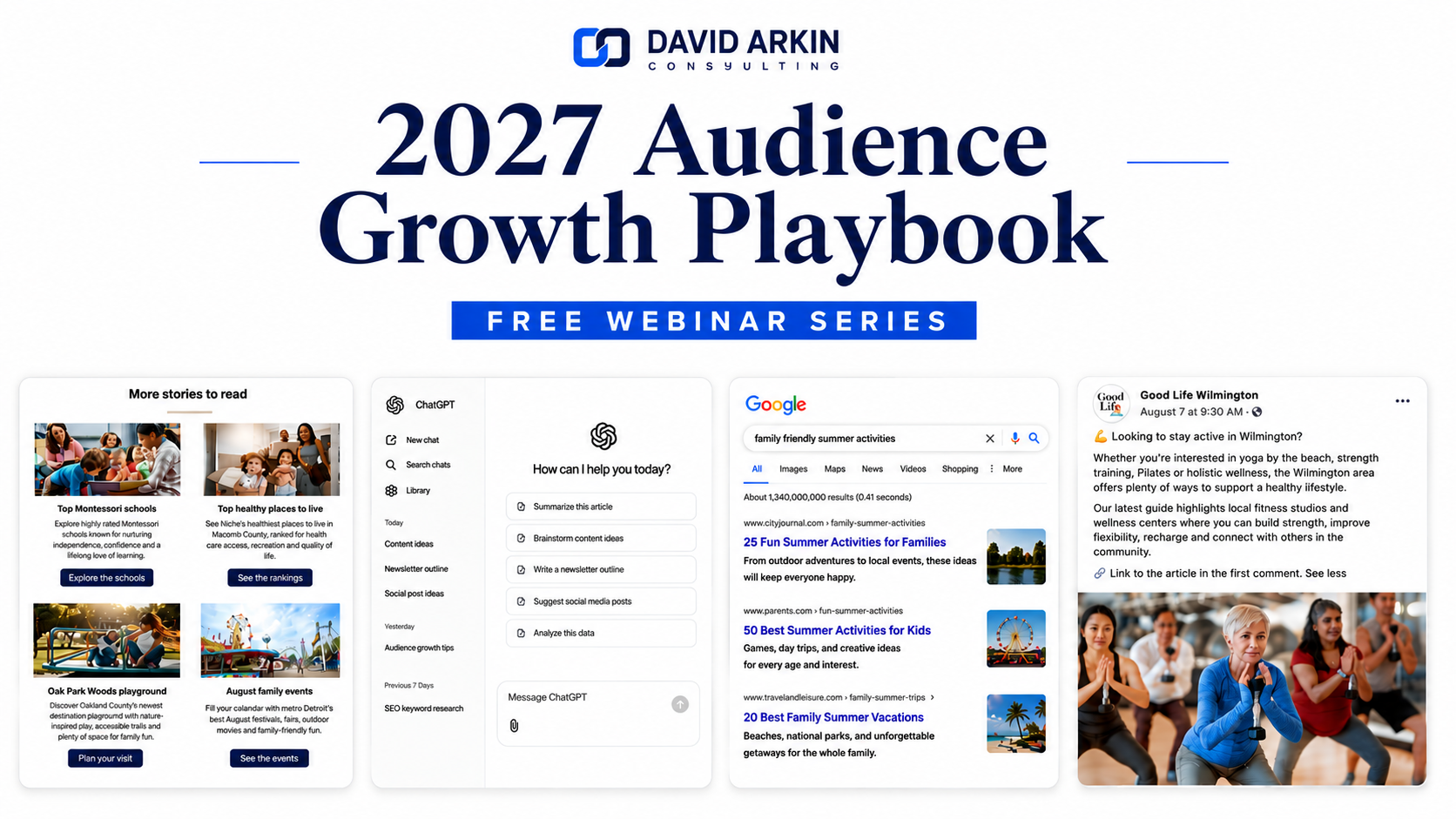
David Arkin Consulting launches 2027 Audience Growth Playbook, a free four-part webinar series for publishers

Jul. 28, 2026
Why branded content is the ultimate launch strategy for any new business

Jul. 20, 2026
How embeddable content can help grow search traffic and AI visibility

Jul. 14, 2026
3 search changes every publisher should be paying attention to right now

Jul. 07, 2026
3 lessons shaping media companies during the first half of 2026
Sign Up For Our Newsletter
Case Studies

Jul. 05, 2026
The Reels strategy helping one TV news anchor grow her audience

May. 27, 2026
How Pittsburgh Magazine created AI workflows their teams are now regularly using

Mar. 16, 2026
How a unique training program is helping a university newspaper learn the digital skills newsrooms need

Jul. 30, 2025
How analytics can make your content better and your sales case studies really effective

Feb. 06, 2025